

Author name: admin

Blogs

How TensorQ’s AI Digital Twin Is Redefining Enterprise Optimization

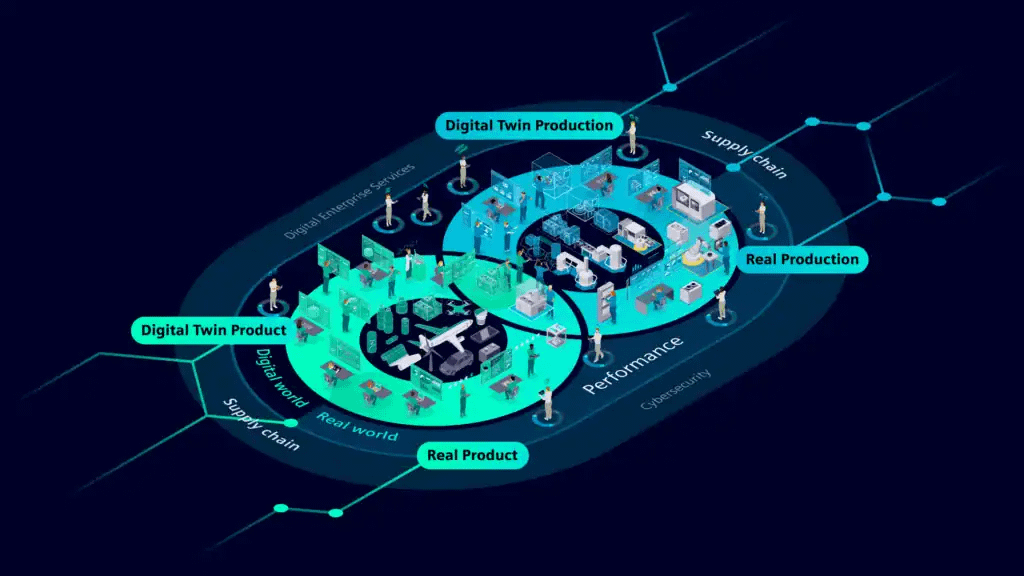
QuadOptima’s flagship product, TensorQ, goes far beyond traditional analytics. It is a Living AI Digital Twin of the enterprise — a continuously evolving mathematical representation that enables executives and employees to understand, predict, simulate, and optimize how the business operates. From procurement and supply chains to plants, products, sales, customers, finance, and operations, TensorQ brings the enterprise together within a unified computational model. Consider a manufacturing company. Its performance depends on a complex network of functions including procurement, transportation, manufacturing, research and development, inventory, sales, finance, distribution, and retail. Across these functions are hundreds or thousands of input variables, intermediate metrics, operational KPIs, financial outcomes, and management decisions. Yet most enterprises analyze these through separate systems and discrete analytical or machine-learning models, each designed to solve a specific problem. The problem is that the enterprise itself does not operate this way. Demand affects production, production affects inventory, inventory drives procurement, procurement influences cost, and pricing affects demand, revenue, and margin. Transportation decisions influence delivery performance, customer experience, cost, and ultimately revenue. A decision made in one part of the organization can propagate through many others. When analytical models examine these functions independently, they see only part of the system and can miss important relationships elsewhere in the enterprise. This fragmentation limits the accuracy of prediction and optimization and makes it difficult to understand the true enterprise-wide impact of a decision. TensorQ takes a fundamentally different approach. Instead of building intelligence around isolated metrics, it represents the enterprise through interconnected microsegments, state variables, drivers, relationships, and outcomes. These are brought together into a unified mathematical representation of how the enterprise behaves. The objective is not simply to predict individual KPIs more accurately, but to understand how the state of the enterprise evolves as thousands of operational and economic variables interact. This changes what a digital twin can do. Traditional dashboards are primarily designed to tell management what has happened. Predictive analytics attempts to estimate what may happen next. A Living AI Digital Twin can go further by continuously connecting the current state of the enterprise with its likely future state and the decisions available to management. TensorQ enables organizations to monitor performance, identify the drivers behind changes, forecast future conditions, simulate alternative scenarios, and determine actions that improve the outcomes that ultimately matter — revenue, cost, profitability, efficiency, service, risk, and growth. TensorQ combines mathematical modeling, machine learning, a comprehensive enterprise data fabric, predictive forecasting, simulation, and optimization to transform existing operational data into a living model of the organization. In this sense, the Digital Twin becomes a kind of enterprise “crystal ball” — not because it guesses what will happen, but because it mathematically models how changes in interconnected business variables can influence future outcomes. The same architecture also creates a common intelligence layer across the organization. A CEO can view the enterprise through profitability and growth, a CFO through revenue, cost, and capital allocation, and an operations leader through capacity, productivity, reliability, and execution. These are not separate versions of the enterprise. They are different views of the same underlying mathematical state. This allows decisions made across functions to be evaluated against their broader operational and financial consequences. QuadOptima has developed Digital Twin applications across airlines, airports, healthcare, manufacturing, electricity, and supply-chain environments, demonstrating how complex operational data can be transformed into actionable enterprise intelligence. The underlying principle is consistent across industries: an enterprise is an interconnected economic and operational system, and its intelligence should reflect that reality. The next generation of enterprise AI will therefore do more than search documents, generate content, or provide isolated predictions. It will increasingly need to understand how businesses behave, how decisions propagate across the organization, and how thousands of interconnected variables collectively determine business outcomes. That is the idea behind TensorQ — a Living AI Digital Twin that turns the enterprise itself into a computational model.

Blogs

Digital Twins in Action: Driving Value Across Key Industries

Digital twins have traditionally represented physical assets — an aircraft engine, a production line, or a power plant. TensorQ extends this idea to the enterprise itself, creating a Living AI Digital Twin that represents how thousands of operational and economic variables interact to produce business outcomes. At its simplest, an enterprise can be viewed as an evolving state: Current State + Decisions + External Changes → Future State or mathematically, S(t+1) = F[S(t), A(t), X(t)] where S represents the state of the business, A the actions available to management, and X external factors such as demand, competition, weather, or market conditions. The objective of the Digital Twin is therefore not merely to predict individual KPIs. It is to understand the state of the enterprise and determine the actions that move it toward a better one. Airlines: From Optimizing Fares to Optimizing Profitability Consider an airline with unusually strong demand for an upcoming Chicago–London flight. A traditional revenue management system might respond by increasing fares or restricting lower-priced inventory. But the real economic outcome depends on much more: connecting passengers, aircraft capacity, corporate contracts, loyalty behavior, competitor pricing, displacement of other passengers, distribution costs, fuel costs, and effects elsewhere in the network. The airline is really trying to solve: Optimal Action = arg max (Revenue − Cost) subject to capacity, network, customer, and operational constraints. TensorQ’s Digital Twin connects these variables so the airline can simulate alternative pricing, inventory, capacity, and commercial decisions and evaluate their impact on the overall economic state — rather than optimizing a fare or flight in isolation. Manufacturing: Production Is Not the Objective Now consider a manufacturer facing a 15% increase in forecast demand. Increasing production appears to be the obvious response. But additional production changes material requirements, supplier capacity, labor, maintenance, inventory, transportation, working capital, and ultimately margin. Maximizing plant output can therefore be very different from maximizing enterprise value. The Digital Twin evaluates the complete relationship: Demand → Materials → Production → Inventory → Distribution → Customer → Revenue − Cost TensorQ can simulate alternatives such as increasing production, shifting output between plants, reallocating inventory, changing supplier volumes, or prioritizing higher-value customers. The objective changes from “maximize production” to “find the combination of actions that maximizes the enterprise outcome.” Healthcare: A Bed Problem May Not Be a Bed Problem Consider a hospital expecting a surge in admissions during the winter respiratory season. Forecasting may show that bed utilization will exceed 95%. The obvious conclusion is that the hospital needs more beds. But the true constraint could instead be nursing availability, emergency department throughput, diagnostic capacity, discharge delays, operating-room schedules, or intensive-care capacity. The Digital Twin can represent these relationships as: Patient Demand → Resources → Capacity → Flow → Outcomes + Cost Management can then simulate additional staffing, accelerated discharge, rescheduled procedures, bed reallocations, or changes in clinical capacity before implementing them. Instead of simply predicting a capacity problem, the Digital Twin helps identify which intervention produces the best system-wide outcome. One Mathematical Idea Across Every Industry An airline seat, a manufacturing plant, and a hospital bed appear very different. But the underlying enterprise problem is remarkably similar. Every organization consists of states, drivers, decisions, constraints, and outcomes: Enterprise State = f(Customers, Products, Assets, People, Demand, Capacity, Cost, Revenue, Risk, Decisions) Traditional enterprise technology separates these relationships across departments, applications, dashboards, and specialized models. TensorQ brings them back together within a unified computational representation. This allows an organization to move continuously through: Observe → Predict → Simulate → Optimize → Act The airline no longer needs to optimize only fares. The manufacturer does not need to optimize production independently of demand and profitability. The hospital does not need to optimize beds without understanding patient flow and resource constraints. Each can instead ask the more important question: What actions move the entire system from its current state S(t) toward the best achievable future state S*? That is the larger promise of TensorQ’s Living AI Digital Twin — not simply a digital representation of the enterprise, but a mathematical model for understanding how it evolves and continuously determining how it can perform better.

Blogs

Why Causal AI Beats Traditional Analytics for Business Growth

Traditional analytics is very good at telling businesses what happened. Machine learning has taken this further by becoming increasingly good at predicting what is likely to happen next. But for executives making decisions, there is a more important question: What should we change to produce a better outcome? Answering that question requires moving beyond correlation and prediction toward understanding the relationships between drivers, decisions, and outcomes. Consider a company whose sales have declined by 8%. A predictive model may accurately forecast that the decline will continue next quarter. But management still needs to know what is driving it. Is the problem price? Customer churn? Product availability? Competitor activity? Distribution? Service levels? Or some combination of these factors? More importantly, management needs to understand what happens if it intervenes. This is the fundamental difference between prediction and causal decision intelligence: Prediction: P(Y | X) → What is likely to happen? Intervention: P(Y | do(X)) → What is likely to happen if we change X? For a business, that distinction is critical. Knowing that two variables move together does not necessarily mean that changing one will produce the desired change in the other. TensorQ approaches the enterprise as an interconnected system of states, drivers, controls, constraints, and outcomes. Instead of analyzing hundreds of KPIs independently, it models how changes propagate through the organization. Consider an airline trying to improve profitability. A traditional model might discover that higher load factors correlate with higher revenue. But simply maximizing load factor may require lower fares, which could reduce yield and ultimately profitability. Increasing fares could improve yield but reduce demand. Reducing capacity could improve load factor while simultaneously losing valuable customers. The real relationship is closer to: Price → Demand → Volume → Load Factor → Revenue → Cost → Profit The objective is therefore not to maximize any individual variable. It is to understand how interventions propagate through the system and determine which combination produces the best final outcome. The same principle applies in manufacturing. A model may predict a production shortfall, but increasing production affects labor, materials, maintenance, inventory, transportation, working capital, service levels, and cost. An action that improves one operational KPI can make the overall enterprise outcome worse. TensorQ represents this as an evolving enterprise state: S(t+1) = F[S(t), A(t), X(t)] where S(t) represents the current state of the enterprise, A(t) represents management actions and controls, and X(t) represents external influences. The objective is to identify the actions that move the organization toward its desired state. This creates a fundamentally different role for AI in the enterprise. Instead of simply saying, “Revenue is likely to decline,” the system can help determine what is driving the decline, how those drivers interact, which variables management can actually control, and which interventions are most likely to improve the outcome. That progression can be summarized simply: Observe → Predict → Understand → Intervene → Optimize This is why causal AI matters for business growth. Enterprises do not create value by predicting KPIs. They create value by making decisions that change them. The next generation of enterprise AI therefore needs to move beyond recognizing patterns in historical data. It needs computational models capable of representing how the enterprise evolves, evaluating the consequences of alternative actions, and identifying the path from the current state to a better future state. TensorQ is built around that principle: AI should not only predict the future of the enterprise — it should help management understand how to change it.

About Us

Our vision is delivered through an elegant Digital Twin AI architecture featuring a single enterprise catalog, single deep learning AI platform anchored by a single data fabric of your entire organization.

Contact Us

© 2026 Created with Quadoptima

Scroll to Top